




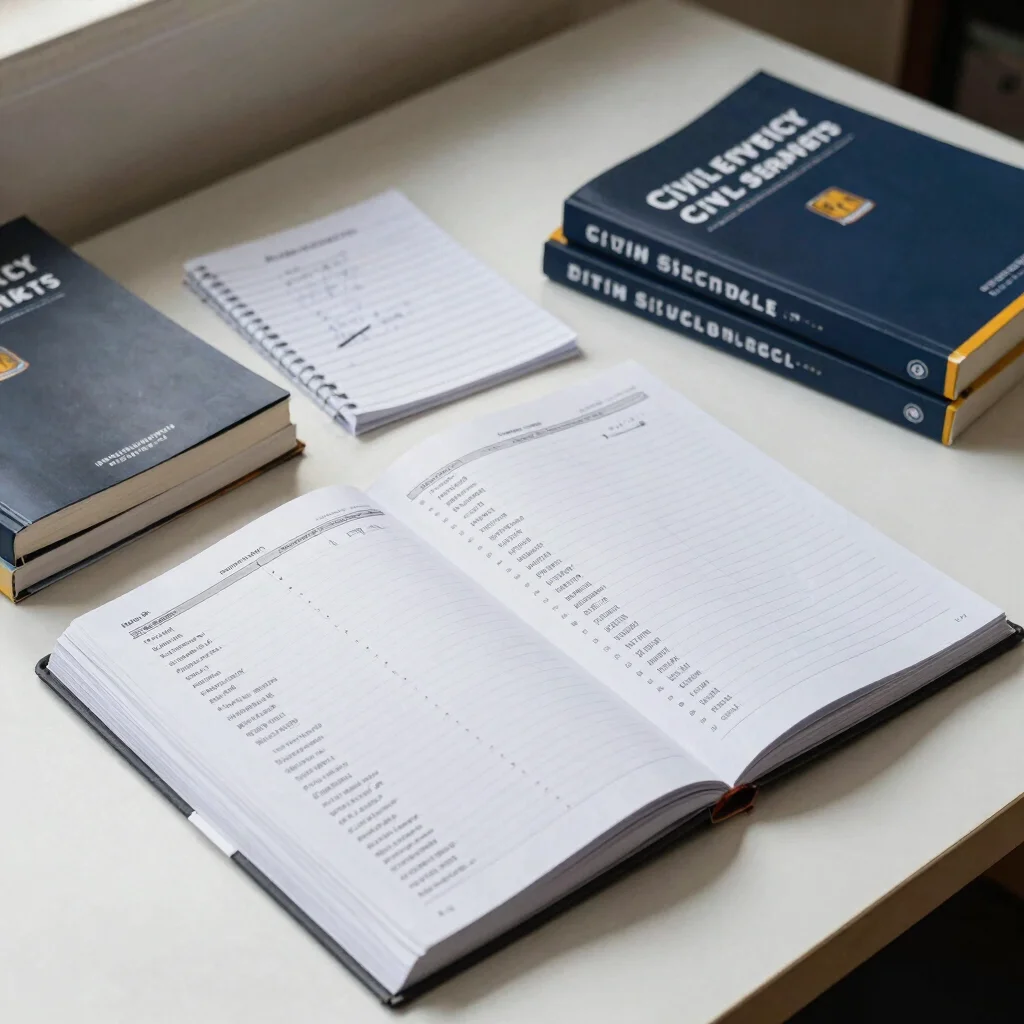
A book list expands quickly: a standard text, class notes, saved articles, and recommendations from other candidates. The challenge is not finding more material; it is knowing where each item belongs and how you will return to it. Let the syllabus act as the organizing frame for your study system.
Make the Syllabus Your Index
Keep the current official syllabus close and divide your notes by its subjects and themes. When you read about a topic such as federalism or monsoon patterns, record the relevant syllabus area rather than filing the material only under a broad subject name. This makes it easier to see what you have covered and where a gap remains.
Choose Materials Deliberately
For each topic, decide which resource will be your primary reference and which materials serve a distinct purpose, such as clarification or examples. Several overlapping sources can consume study time without making the idea clearer. Keep a short note of unresolved questions so you can look them up deliberately instead of opening another source by habit.
Make Revision Part of the System
After a study session, reduce the material to a concise note in your own words and add a date to revisit it. During revision, check whether you can explain the idea without relying on the original page. The goal is not a perfect archive; it is a set of organized materials that helps you retrieve, connect, and use what you have learned.


Leave a Reply